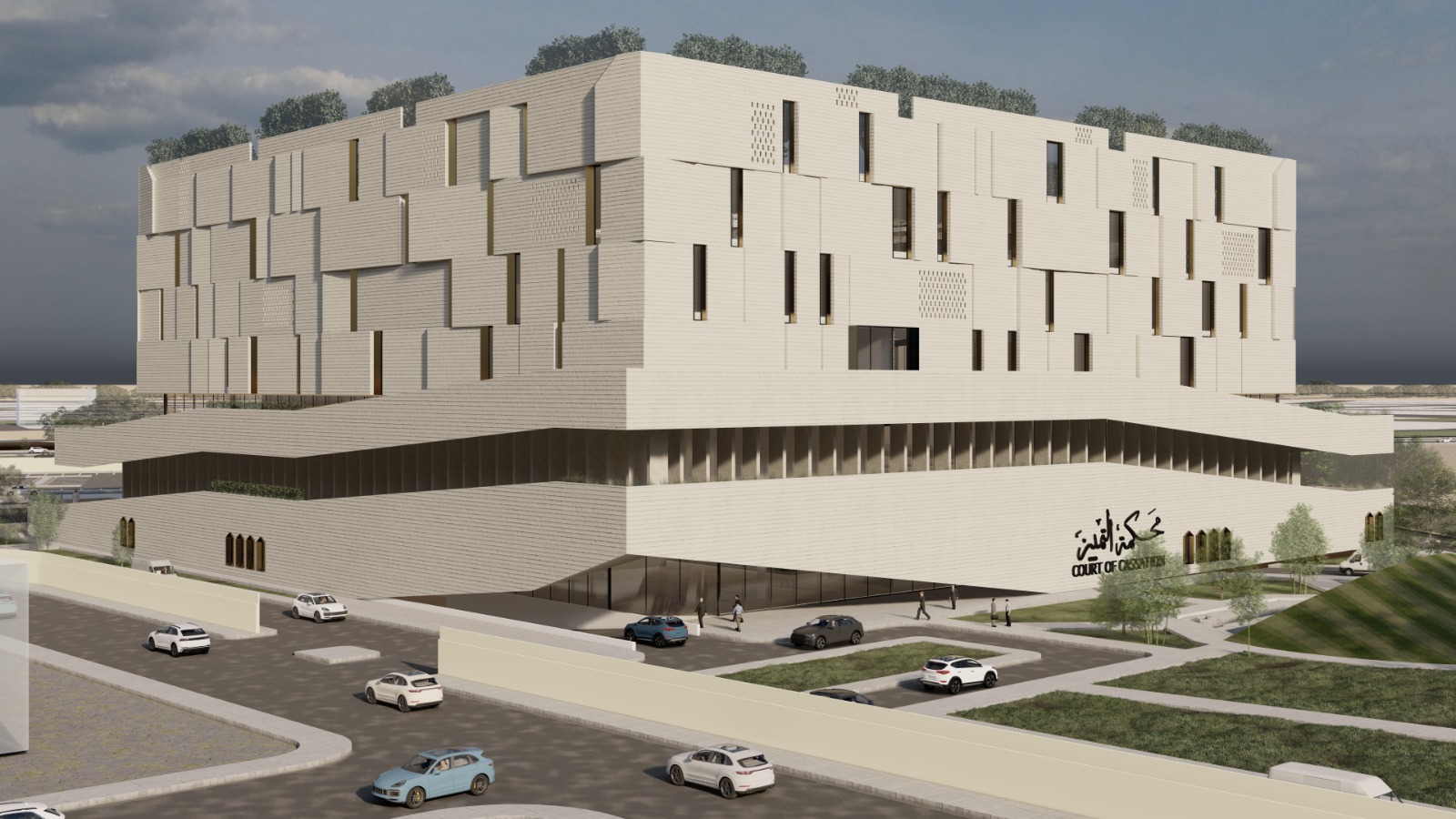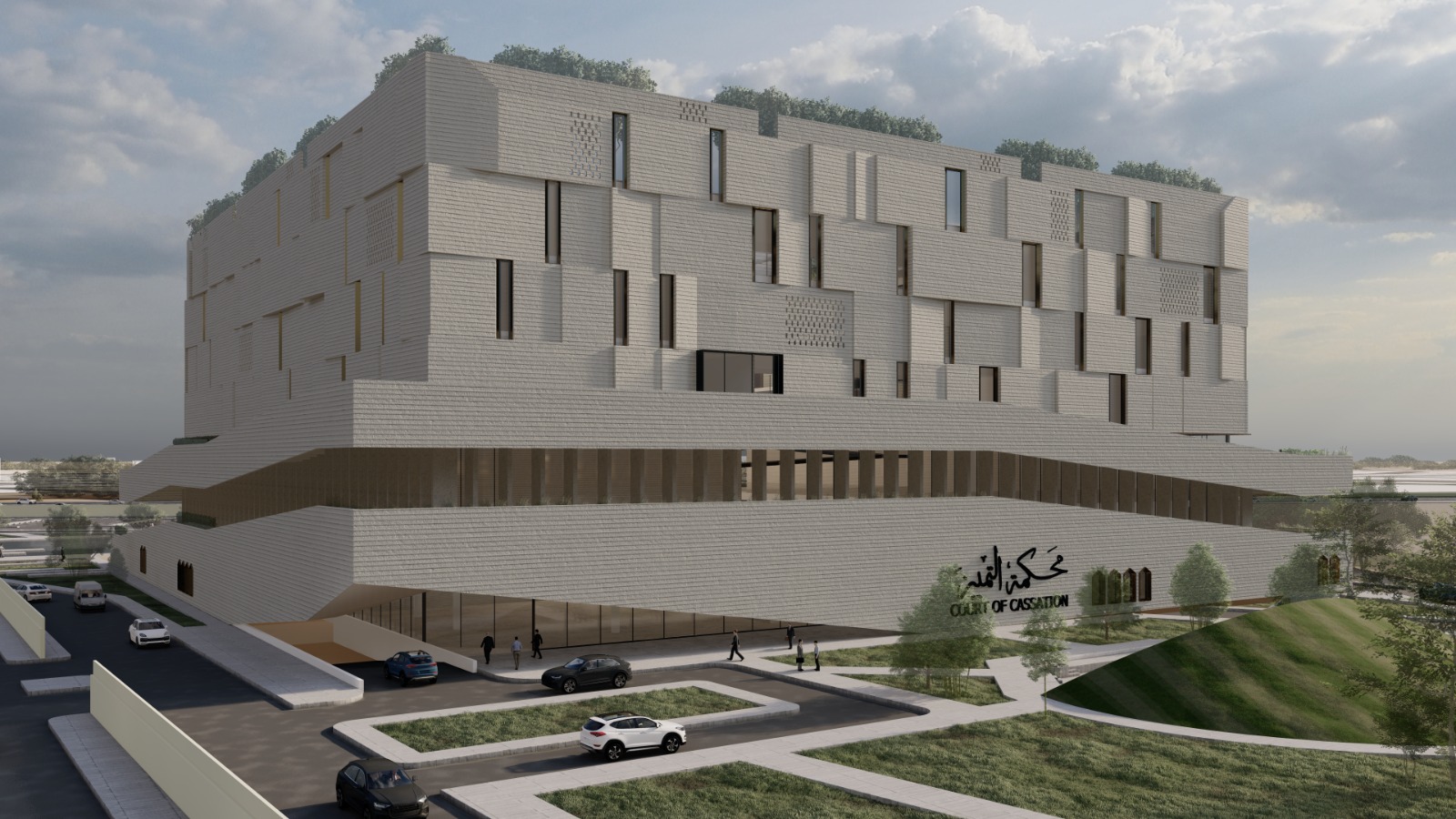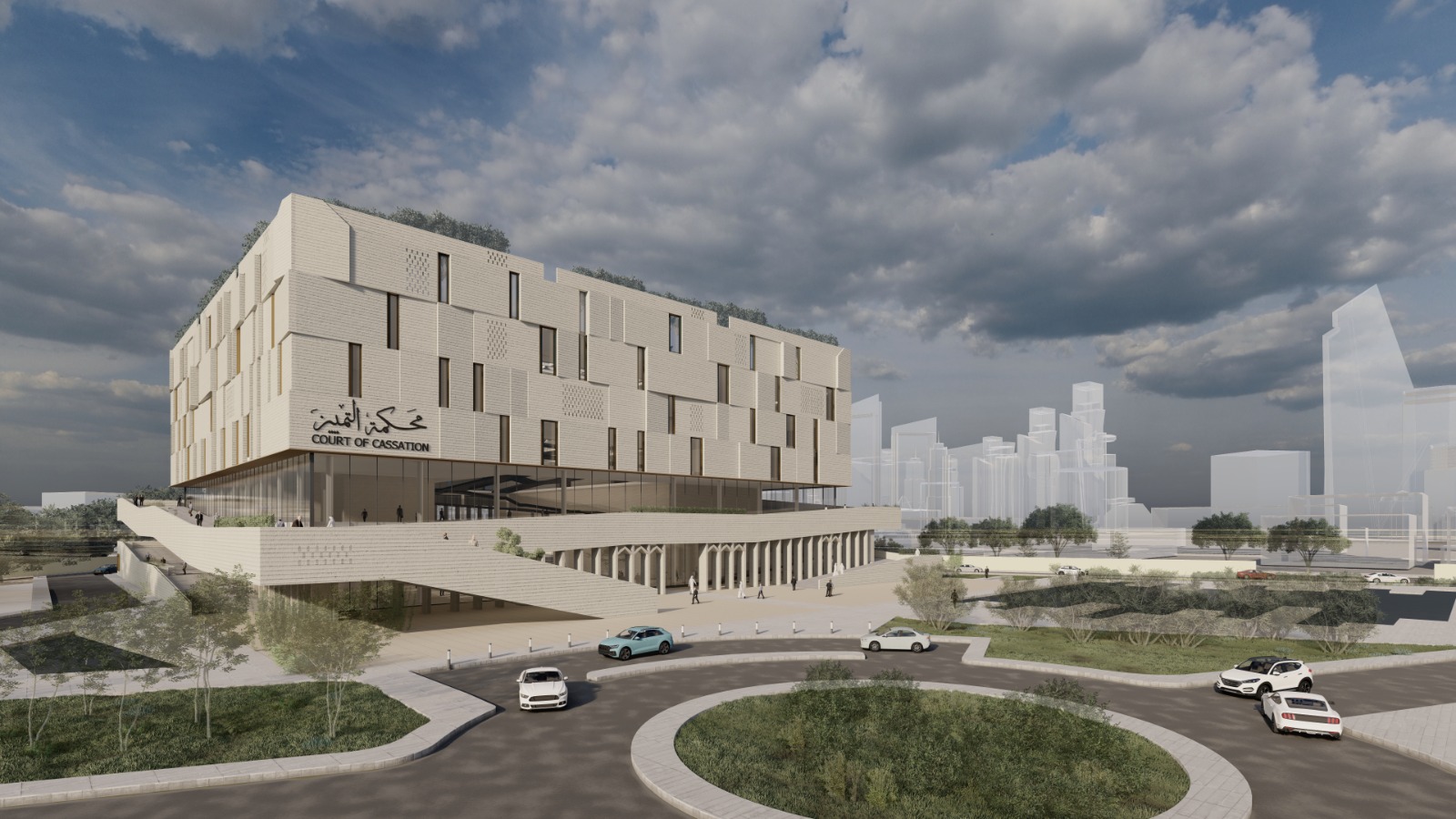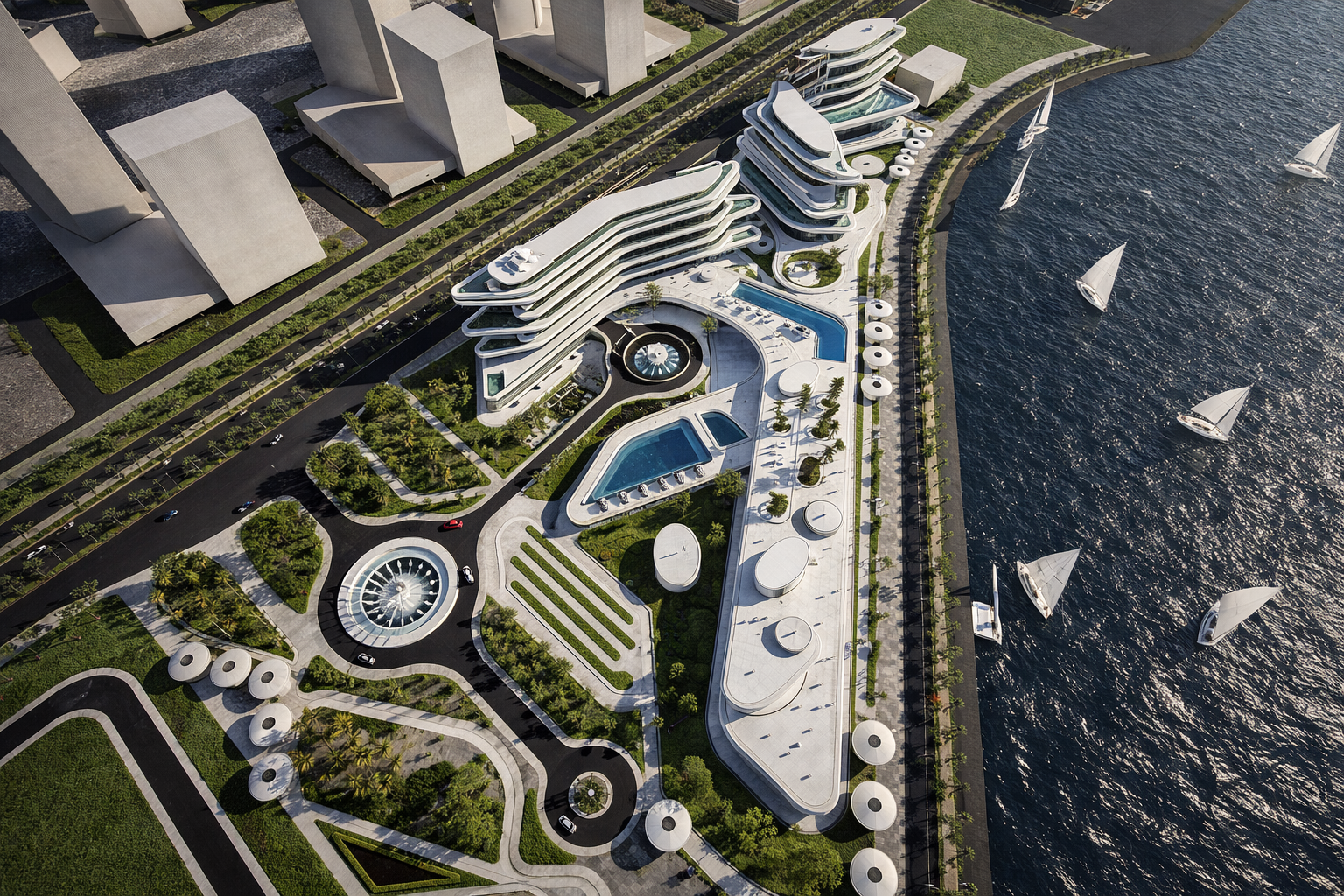
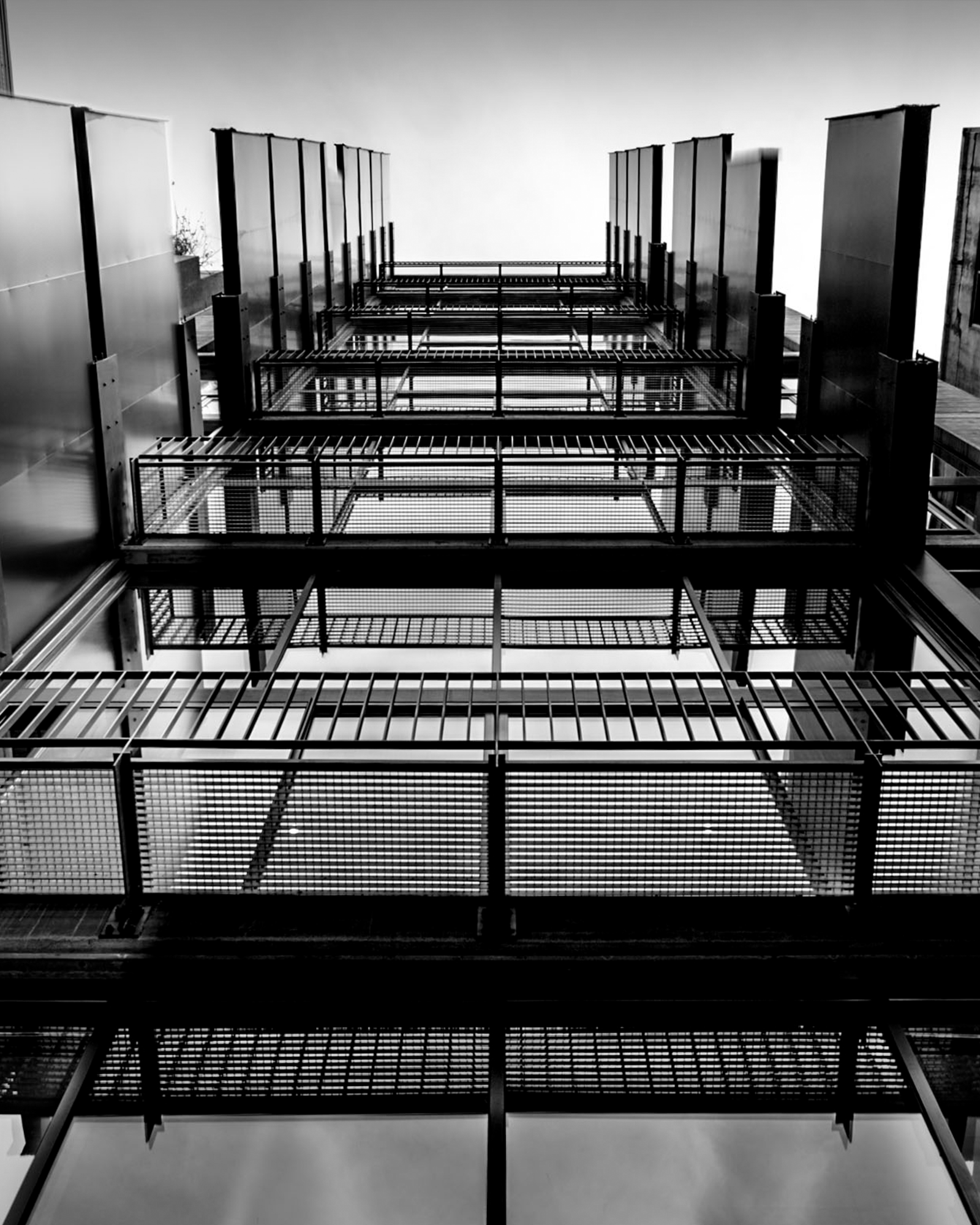
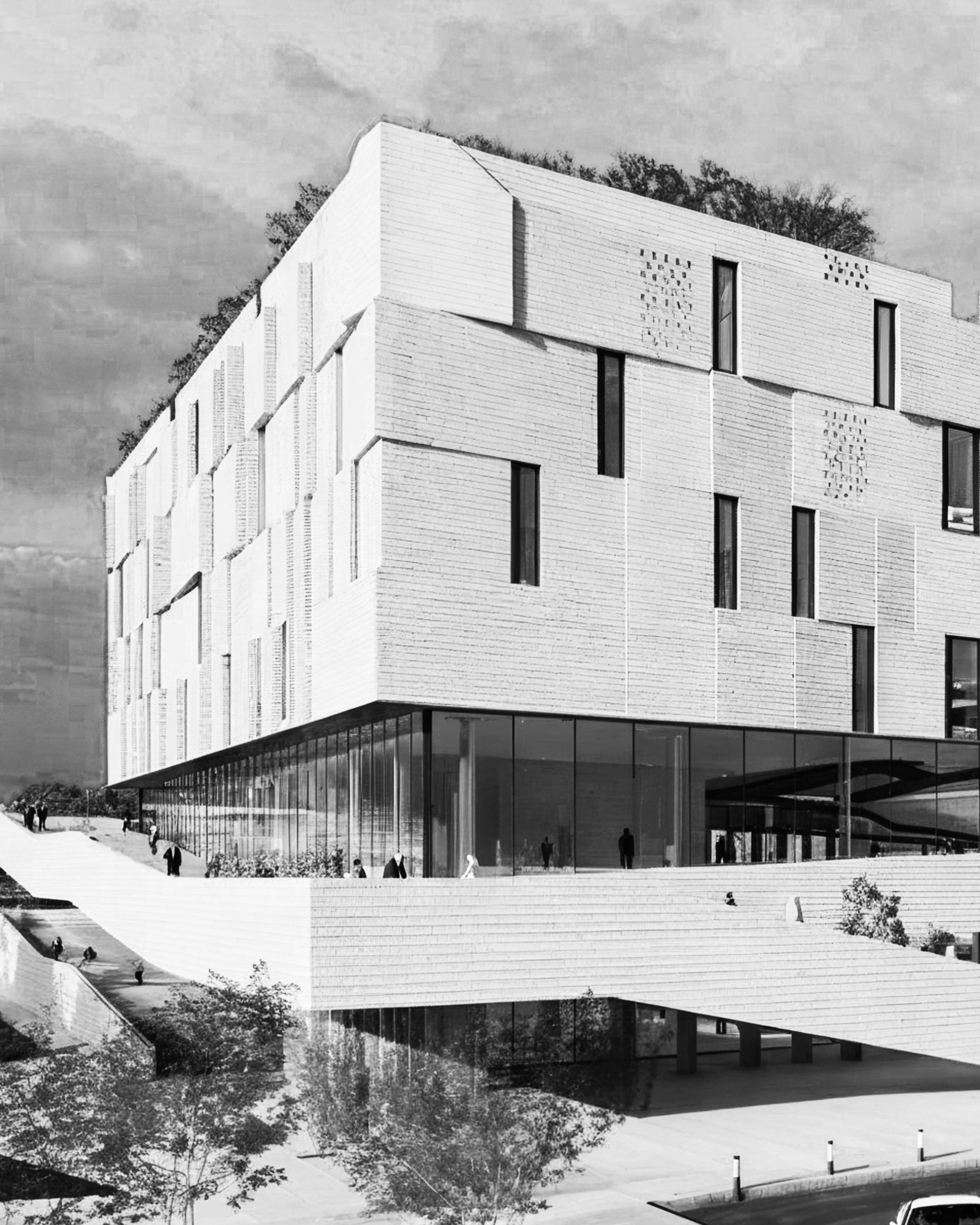
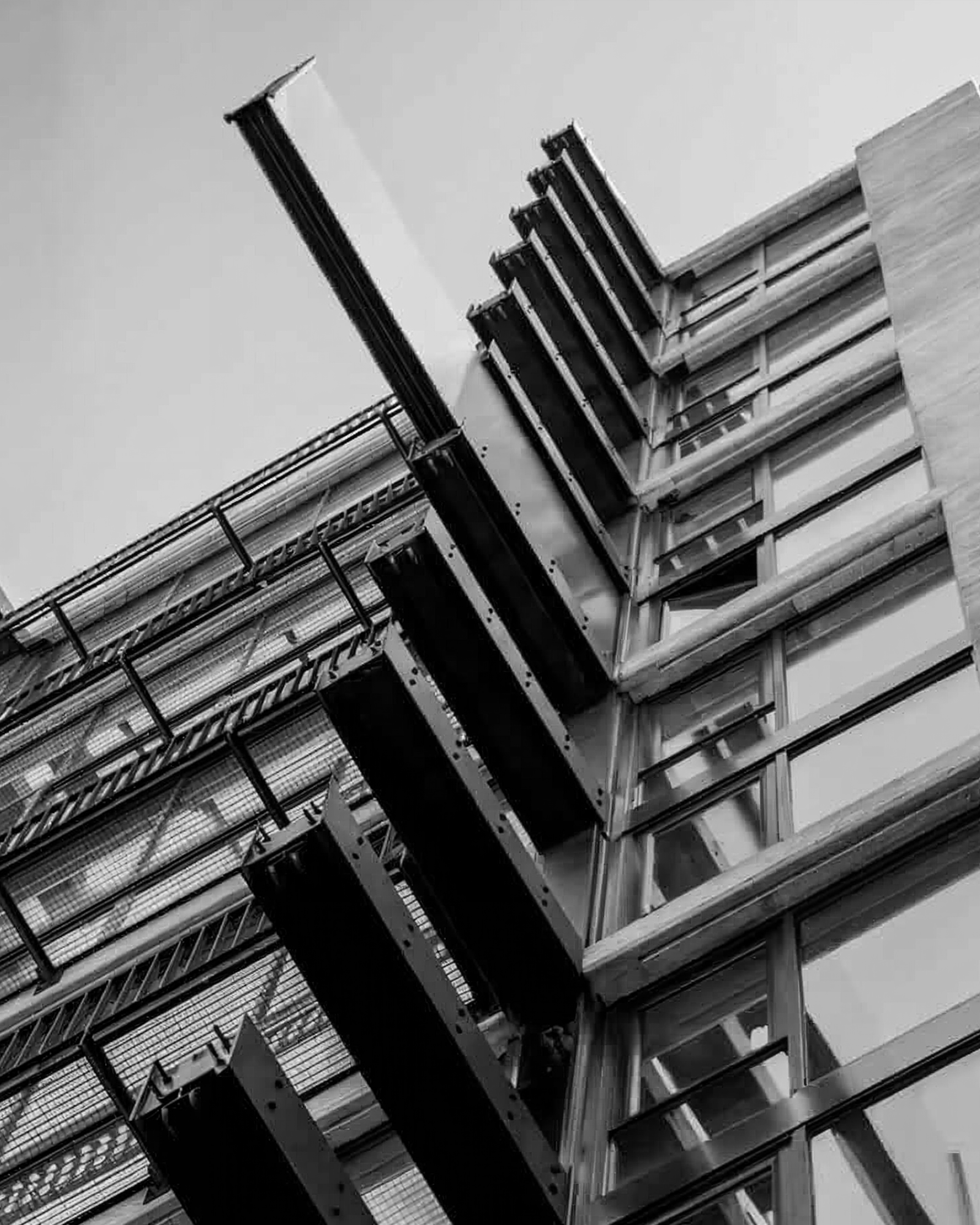
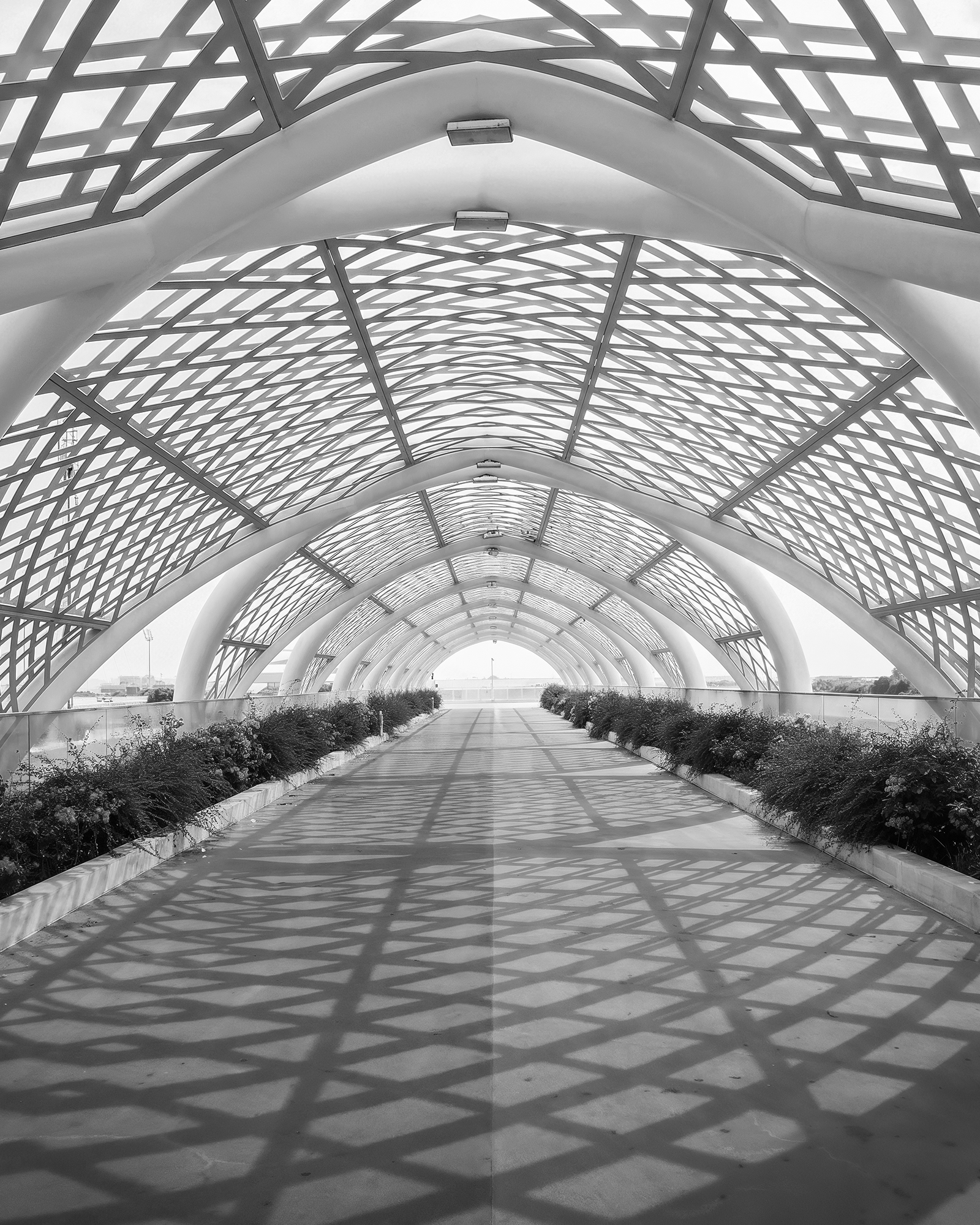
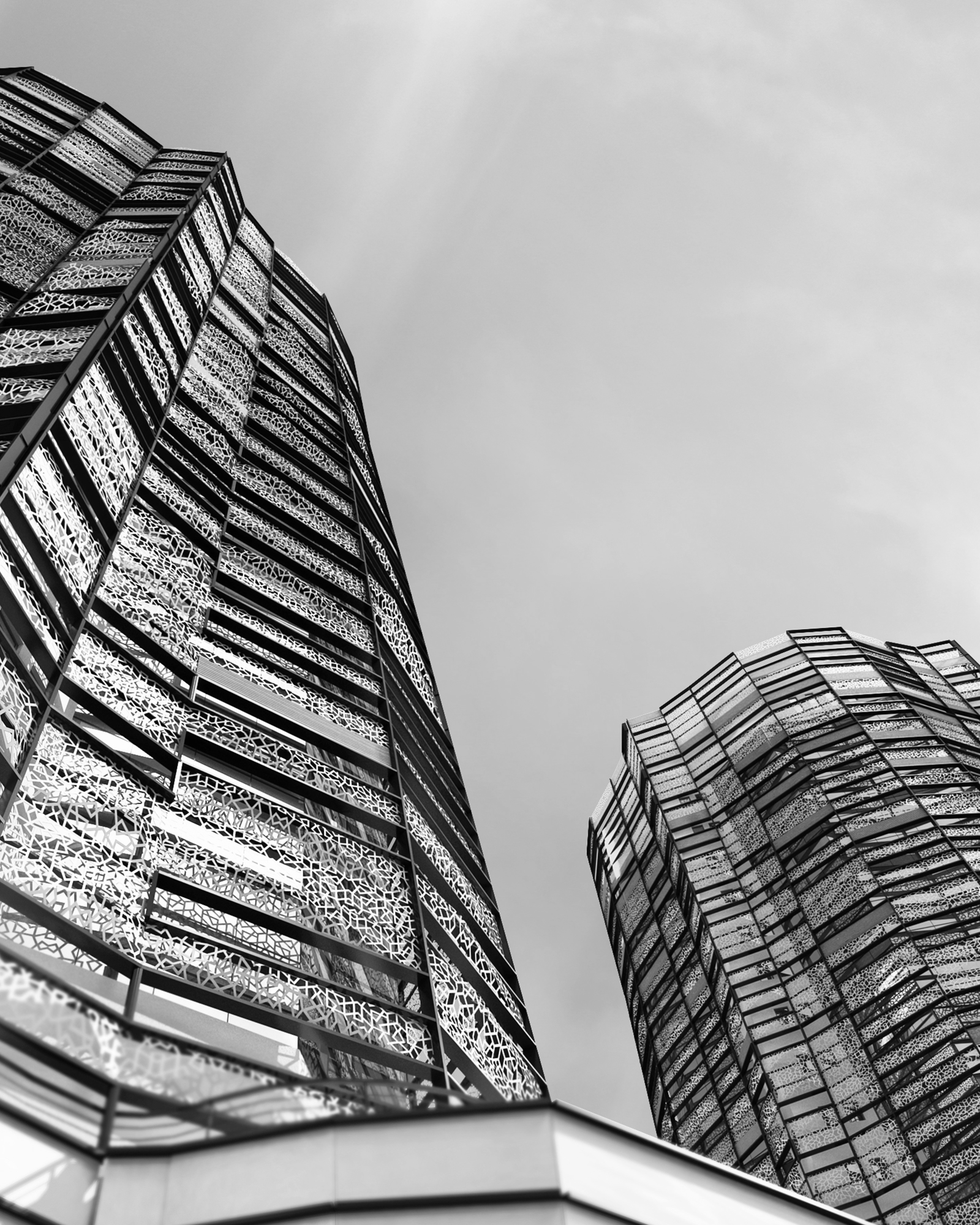
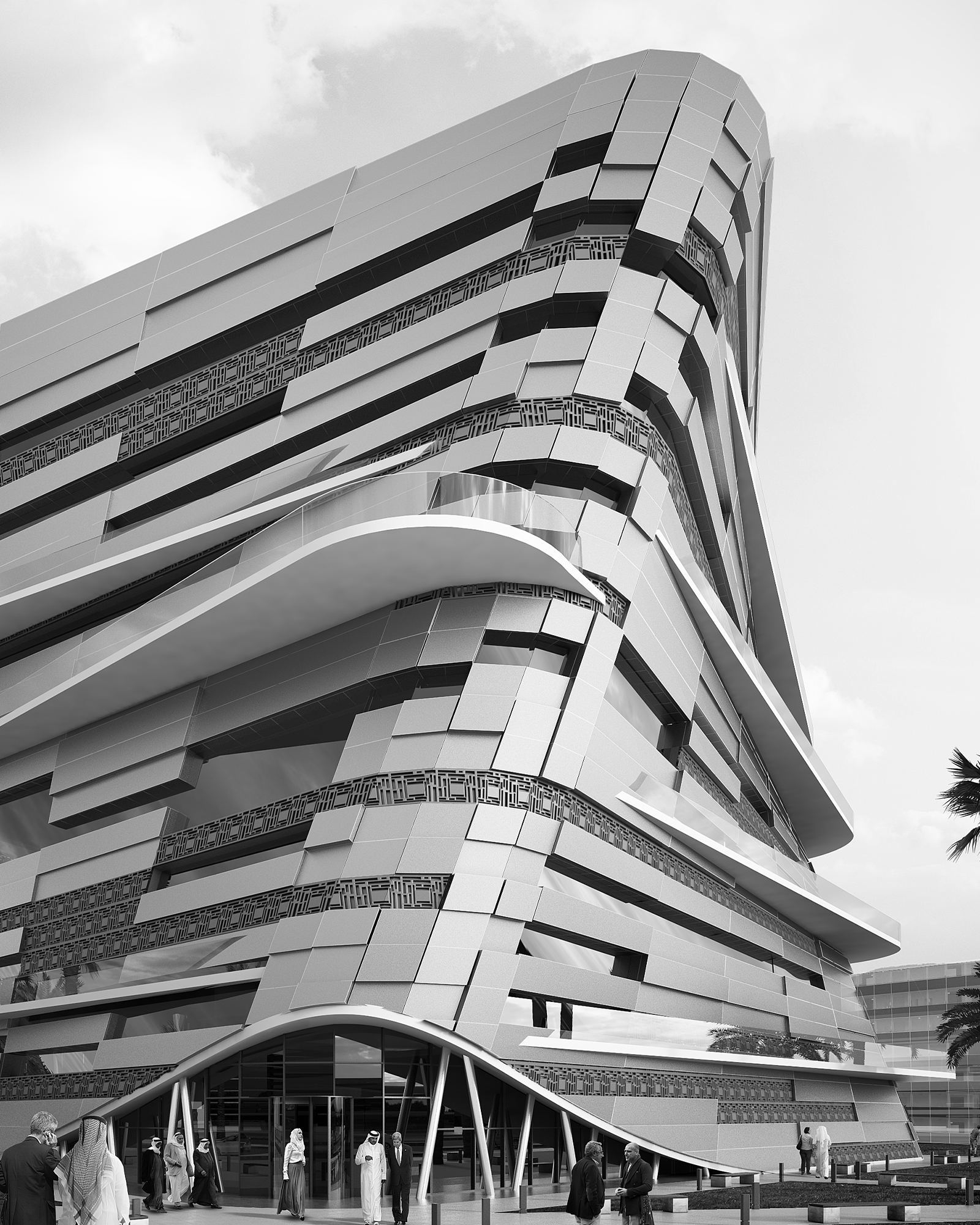
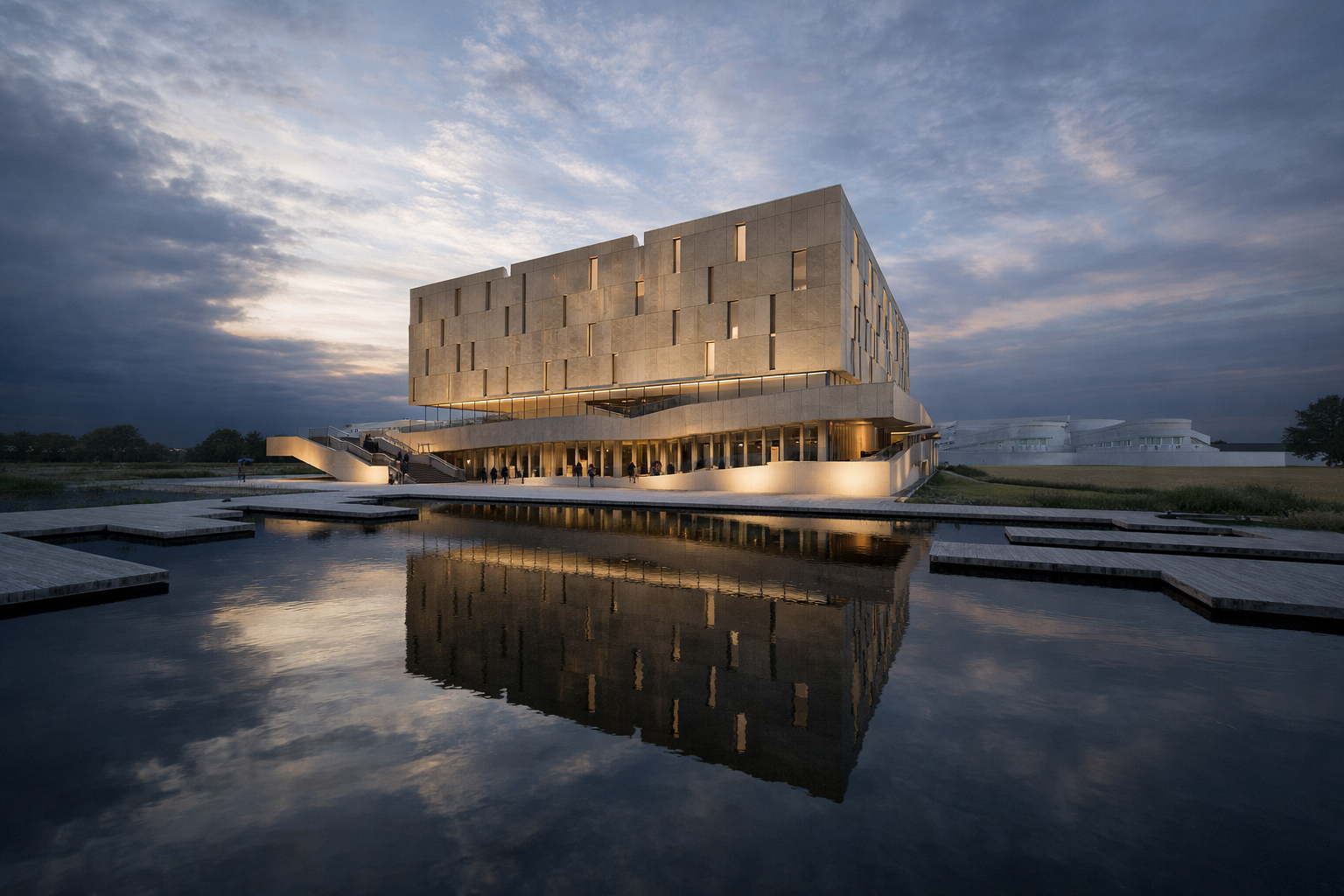
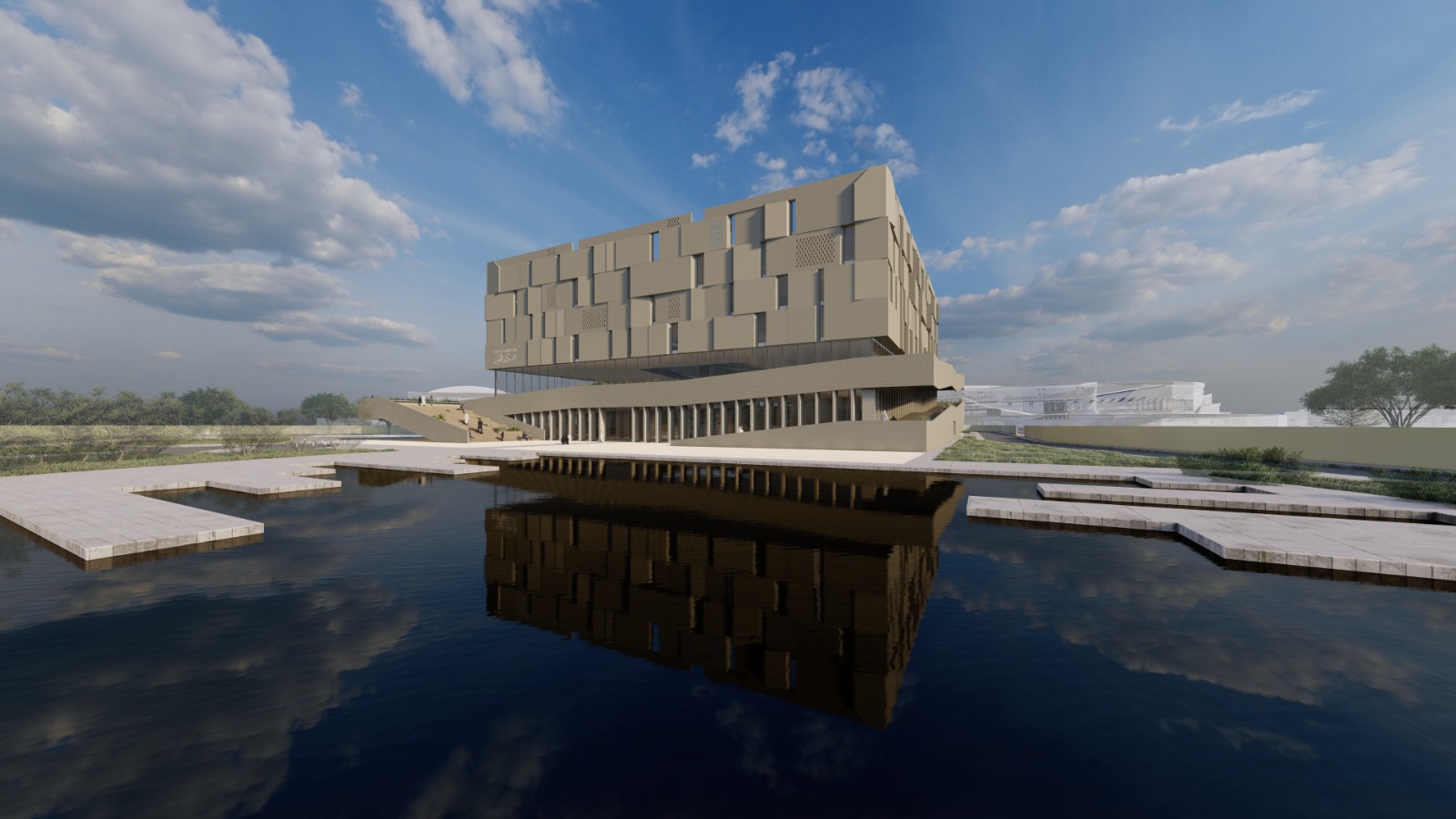
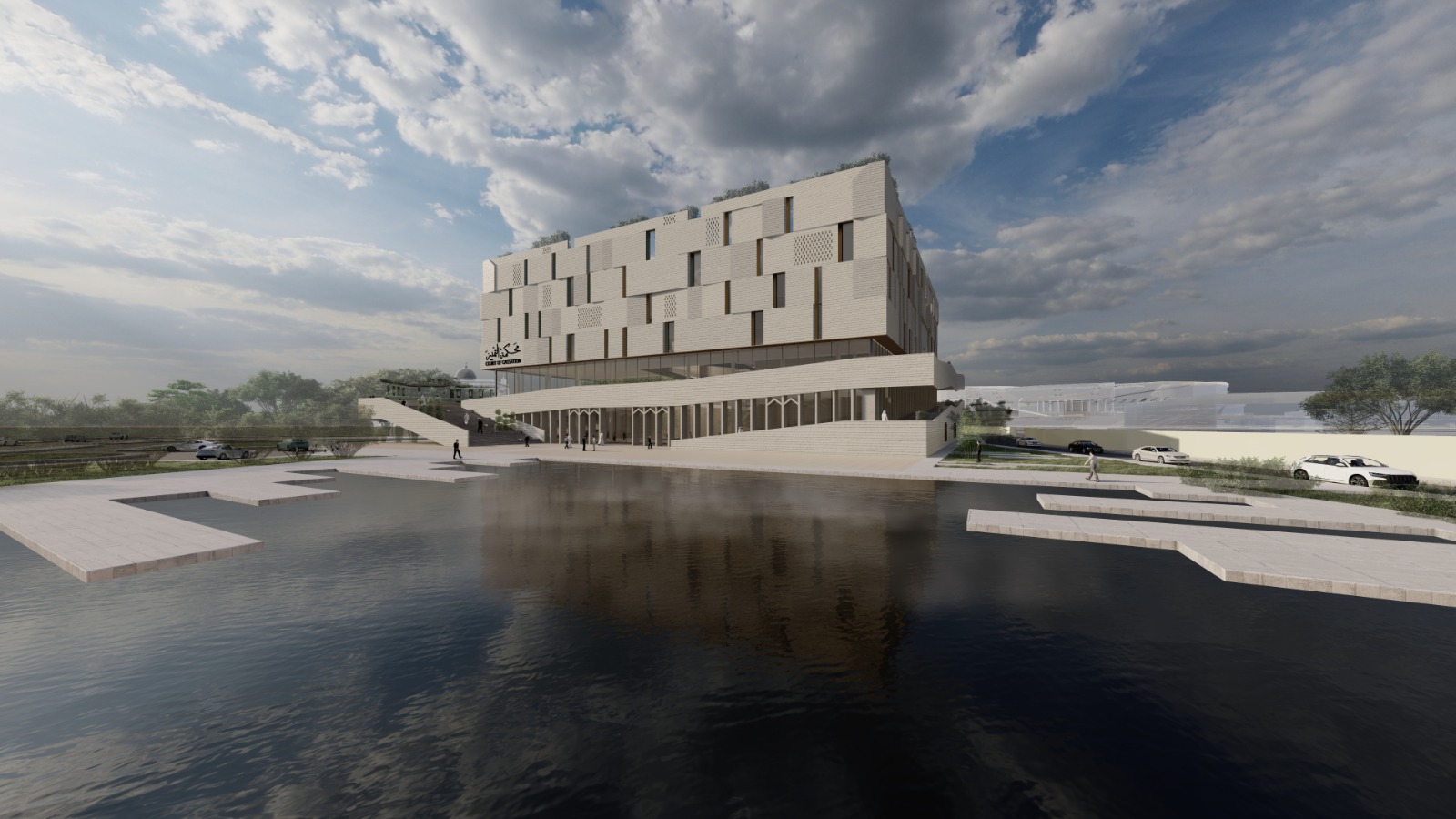
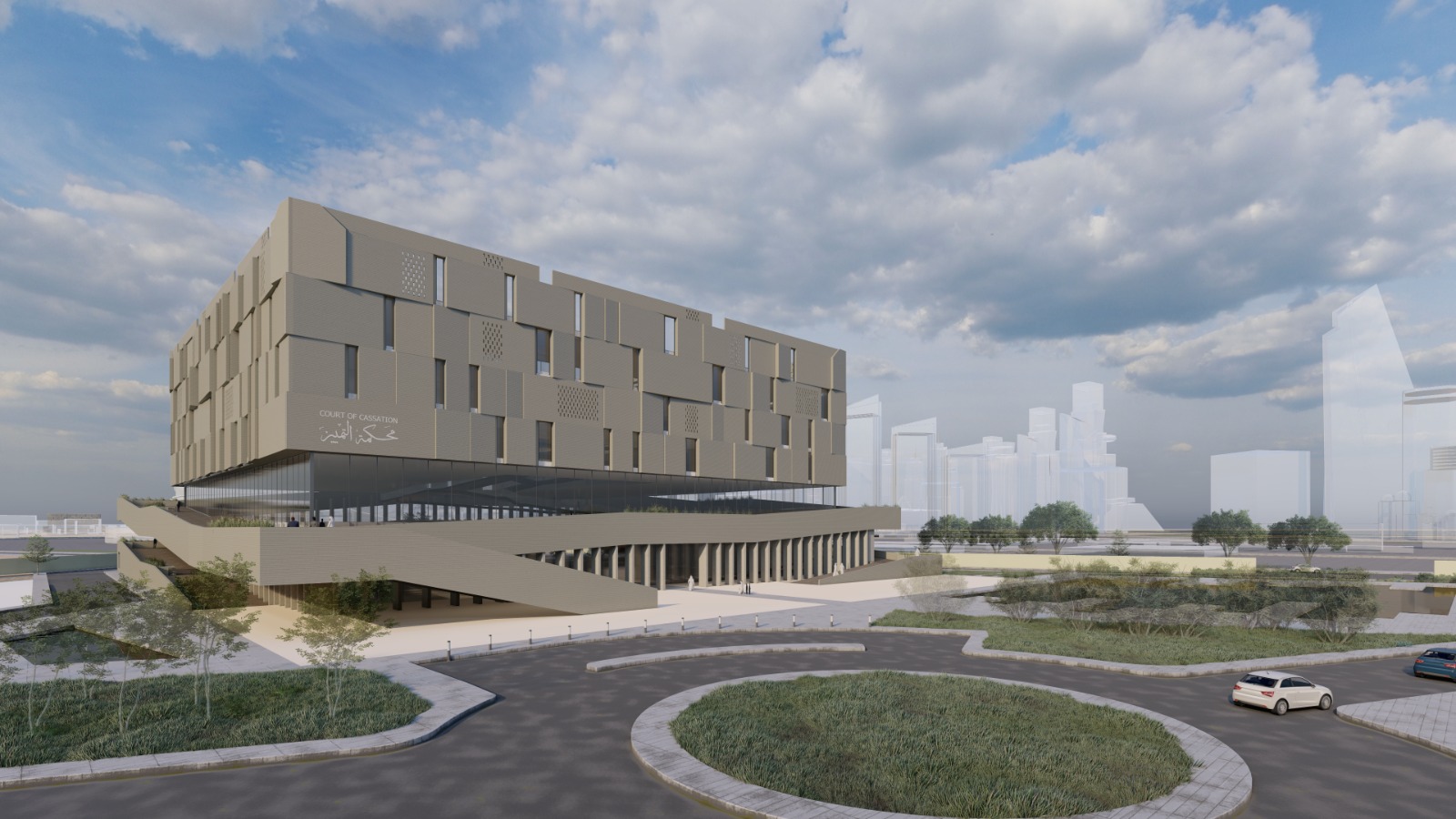
The design proposal for the Court of Cassation and Courts Complex in Qatar reflects how architecture can embody the principles of justice, balance, and transparency. Conceptualized as a calm and dignified civic landmark, the complex is intended to create an inclusive environment that offers clarity, reassurance, and a sense of belonging for all users.
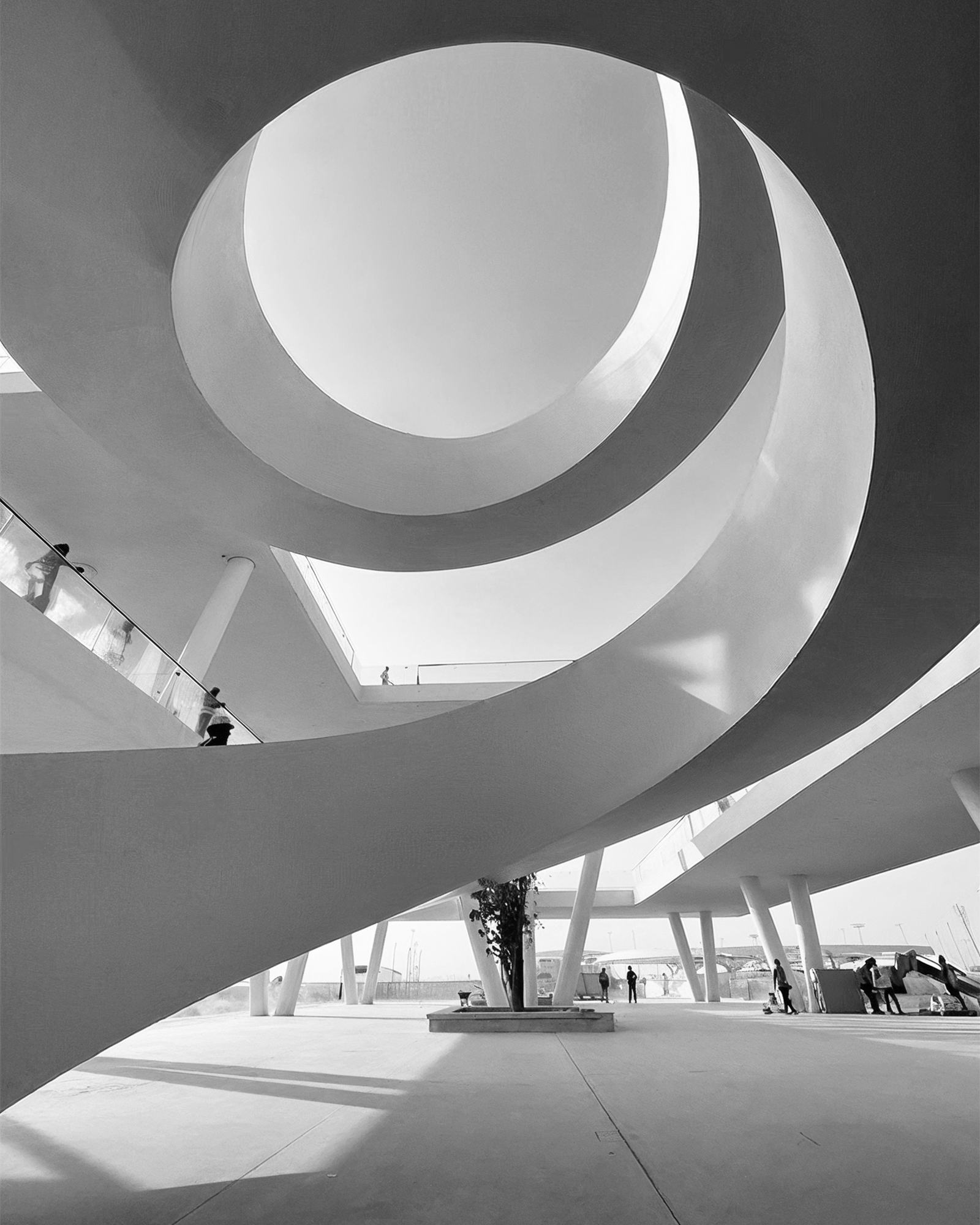
A continuous ramp forms the conceptual and spatial spine of the building, weaving through all levels and connecting public, semi-public, and judicial spaces. Beyond its functional role, the ramp symbolizes equality of access and transparency, guiding users through the courthouse in a legible and humane sequence while creating moments of pause and reflection.
At the heart of the complex, a luminous central atrium serves as the civic core. Flooded with natural light, it reinforces openness and accountability, anchoring the public spaces and visually linking the courts to create orientation, connection, and collective identity.
Together, the ramp and atrium transform the courthouse into a contemporary sanctuary, a space where movement, light, and architecture performatively express the values of justice and the shared journey it represents.